

Have You Considered How The US Legal Market In 2026 Will Directly Impact Your Practice, Your Caseload, And Your Bottom Line? With skyrocketing client demands, rising costs, and technological disruption, attorneys face a pivotal moment.
Moreover, every decision—how you manage staff, adopt technology, or structure client billing—could define your firm’s success or struggle.
According to Thomson Reuters, the 2026 Report on the State of the US Legal Market shows record profits and unprecedented demand. But also warning signs that could threaten stability in the law market. For attorneys, understanding these trends is no longer optional; it’s essential to protect and grow your practice.
What Does The 2026 Report On The US Legal Market Reveal?
The 2026 Report on the State of the US Legal Market, produced by the Thomson Reuters Institute and Georgetown Law, highlights a legal landscape at a critical inflection point. While the market shows record profits, rising demand, and strong working rates, it also exposes structural risks that directly affect attorneys and law firms.
US Legal Market In 2026: Key Takeaways And Their Impact On Lawyers
- Record Demand Surge: Firms across the US saw client demand at its highest level since the global financial crisis. Consequently, attorneys face heavier caseloads, tighter deadlines, and increased client pressure. Without efficient support or technology, lawyers risk burnout and reduced service quality.
- Profit Growth (+13% Year-Over-Year): Firms are profitable, but this growth often masks uneven distribution. Small and mid-size law firms may struggle to compete with larger firms unless they optimize operations, adopt technology, or leverage flexible staffing solutions to handle more clients efficiently and learn how to improve law firm profitability.
- Worked Rate Growth (+7.3% Year-Over-Year): Attorneys are earning more per hour on average, but with higher expectations from clients for speed and value. Lawyers without streamlined processes may spend too much time on administrative tasks, reducing their potential to bill effectively.
- Structural Risks: Despite these gains, 90% of legal revenue still relies on billable hours. Furthermore, firms that fail to innovate in pricing, workflow, or client service may see demand plateau or clients move to alternative legal service providers (ALSPs).
In short, while the US legal market in 2026 is full of opportunity, it also demands that attorneys and law firms adapt quickly. Such as, heavy workloads, rising client expectations, and a competitive labor market mean that only those who strategically embrace technology, specialization, and flexible staffing will fully benefit from these trends.
Performance Of The US Legal Market In 2026
The graph below highlights these 2026 performance metrics—profit growth, demand surge, and work rate growth—showing both opportunity and pressure points for legal professionals.
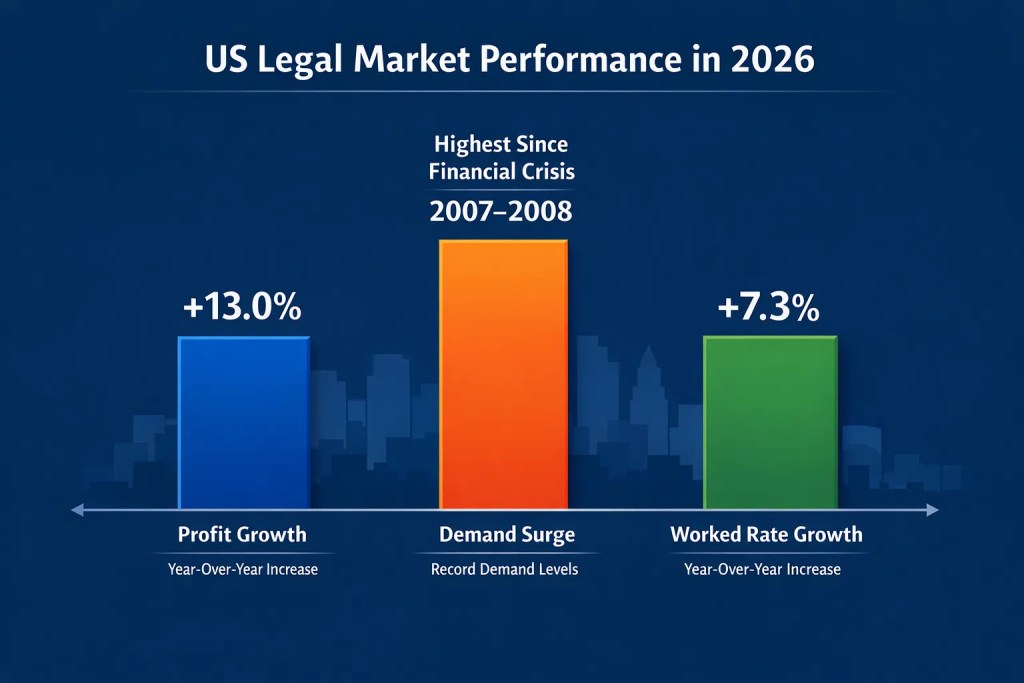
Based on the 2026 Report on the State of the US Legal Market by the Thomson Reuters, these performance indicators show a market experiencing strong demand and profitability, while quietly revealing structural pressure points attorneys cannot afford to ignore.
Graph Concept: A bar chart showing:
- Profit growth: 13%
- Demand surge: highest since the Global Financial Crisis
- Working rates growth: 7.3%
The graph highlights that while firms recorded record profits and demand in 2025, these gains are built on volatile foundations, including regulatory shifts, geopolitical instability, and rising costs.
Unlock the full insights from the 2026 legal market report and see how these trends could impact your practice. Explore our Virtual Paralegal services.
What Are The Biggest Trends Shaping The US Legal Market In 2026?
According to the 2026 report, several transformative trends are reshaping the US legal market. Furthermore, these trends have direct implications for attorneys and law firms.
1. Unprecedented Demand Surge
Smaller and mid-size firms captured most of the growth as clients moved work from high-cost firms to cost-efficient alternatives. Consequently, attorneys face heavier workloads, emphasizing the need for streamlined workflows and virtual support.
2. Intense Expense Growth
Technology investments and rising talent costs are increasing. Legal AI tools are essential, but without matching revenue growth, the dual investment in tech and headcount creates pressure on margins.
3. Structural Business Model Conflict
Despite tech investments, 90% of legal revenue still relies on hourly billing. As a result, attorneys who innovate in pricing—offering alternative fees or subscription models—are better positioned to attract and retain clients.
4. Deteriorating Buyer Sentiment
Corporate general counsels indicate potential spending pullbacks, with net spend anticipation dropping to pandemic-era levels. Therefore, lawyers must demonstrate tangible client value to maintain engagement.
5. Historical Warning Patterns
Additionally, current conditions—high demand, rising expenses, and optimism—mirror pre-downturn periods. As such, attorneys need proactive strategies to safeguard their practices against potential market corrections.
Which Law Firms And Attorneys Are Set To Thrive In The US Legal Market In 2026?
Some attorneys are positioned better to succeed:
Tech-Forward Practices
Lawyers integrating AI and automation into their workflow see higher efficiency, faster client service, and better capacity management. Additionally, tech-forward practices reduce administrative bottlenecks, allowing attorneys to focus on high-value work.
Value-Oriented Firms
Attorneys demonstrating measurable client value—through speed, cost-effectiveness, and transparency—are most likely to retain and attract clients.
Specialized Practices
Niche areas such as immigration, cybersecurity, and ESG compliance show above-average growth and lower levels of competition, offering long-term profitability.
Flexible Staffing Models
Firms leveraging flexible staffing and virtual paralegals can scale without heavy overhead, allowing solo and small firm attorneys to maintain high-quality service despite workload spikes.
Learn how niche specialization and tech-driven support can help your practice excel—Access our Virtual Legal Assistant solutions.

How Can Attorneys Stay Ahead In The US Legal Market In 2026?
A step-by-step guide to thriving amid change:
Step 1: Integrate Virtual Staffing
Delegate administrative, research, and drafting tasks to virtual paralegals to focus on high-value legal work. In addition, this helps prevent burnout and keeps your billable hours high.
Step 2: Adopt Strategic Legal Tech
Use AI-assisted document review, case analytics, and secure cloud workflows. Moreover, combine this with the best document management system for law firms to ensure all case files and client communications remain organized and accessible.
Step 3: Specialize Strategically
Focus on emerging niches where demand growth outpaces general legal services. As a result, you increase your market positioning and profitability.
Step 4: Rethink Pricing Models
Offer alternative billing methods aligned with client expectations and value delivered. Therefore, you can secure long-term client relationships and stable revenue.
Step 5: Monitor Market Trends
Track demand, client behavior, and competitor moves to make proactive adjustments.
Step 6: Build Resilient Client Relationships
Deepen engagement through regular updates, proactive solutions, and high responsiveness to retain clients amid market volatility. Consequently, you retain clients even amid market volatility.
According to US Legal Support, technology adoption—including AI‑embedded practice management and digital workflow integration—is no longer optional for law firms that want to remain competitive in 2026.
US Legal Market In 2026: Will The US Be In A Recession?
While the economy shows signs of potential slowdown, the legal market remains resilient. However, attorneys should prepare for:
- Tighter client budgets
- Delayed payments
- Higher pressure to demonstrate value
Additionally, firms that use flexible staffing, technology, and specialized practices will navigate a possible economic contraction more effectively.
According to Reuters, employment in the U.S. legal sector continued to grow, reaching record highs in early 2026—even as broader sectors of the economy experienced job losses and weakening conditions. This growth in legal jobs, up 8.2% compared to five years prior, underscores the legal industry’s relative robustness amid broader economic headwinds.
How Wyzer Staffing Helps You Navigate The Changing US Legal Market In 2026?
Step 1. Scale Workloads With Virtual Paralegals
Wyzer provides trained virtual paralegals to manage research, drafting, filings, and client communications.
Step 2. Reduce Overhead Costs In The US Legal Market In 2026
Scale efficiently without hiring full-time staff, saving on benefits, office space, and equipment.
Step 3. Boost Efficiency With Tech-Savvy Support
Wyzer staff are experienced with modern legal tech tools, ensuring seamless integration with your practice.
Step 4. Stay Competitive
Flexible, skilled support allows attorneys to meet rising client expectations while focusing on high-value legal work.
Want to make smarter, data-backed staffing decisions for 2026? Calculate your ideal team size with our Staffing Calculator today!

FAQs About The US Legal Market In 2026
2. Is The Legal Market Saturated In 2026?
The legal market is competitive, but specialization and technology adoption create opportunities. Attorneys focusing on niche practices or leveraging virtual staffing can thrive despite competition.
3. How Do Attorneys Measure Success In A Changing Law Market?
Success comes from balancing client satisfaction, workload management, and financial performance. Leveraging technology and virtual staffing can help optimize these factors.
4. What Percentage Of Lawyers Make $500,000?
According to the American Bar Association, only a small percentage of attorneys—roughly 5–7%—earn $500,000 or more annually, typically those in high-demand specialty areas or large corporate firms.
5. What Types Of Tasks Can A Virtual Paralegal Perform?
Tasks include drafting documents, managing client intake, preparing filings, conducting legal research, and organizing case files. These roles are particularly beneficial for solo attorneys or small firms looking to scale.
Conclusion
In conclusion, US legal market in 2026 will challenge attorneys with technology, client demands, and potential economic fluctuations. Consequently, strategic adoption of virtual staffing, tech, and specialization can protect your practice and position you for growth.
Thus, Wyzer Staffing provides attorneys with virtual paralegals and scalable support solutions to manage caseloads, improve efficiency, and thrive in the rapidly evolving legal market.
Ready to take control of your workload and position your practice for success in the evolving US legal market? Book a consultation with Wyzer Staffing today and see how our virtual paralegals can help you manage cases, save time, and stay ahead of the competition.
Discover more from Wyzer Staffing
Subscribe to get the latest posts sent to your email.