

How much more could you achieve if a legal virtual assistant (LVA) handled your firm’s day-to-day tasks?
From scheduling client meetings to drafting case summaries and managing deadlines, LVAs free attorneys to focus on billable work, strategy, and client outcomes.
In fact, firms that leverage legal virtual assistants typically recoup an average of 12 billable hours per week per attorney—translating to thousands of dollars in reclaimed revenue and more time for strategic growth.
By delegating routine but essential tasks, you can work smarter, save time, reduce stress, and scale your practice efficiently.
Ready to see how a legal virtual assistant can transform your law firm? Contact Wyzer Staffing to find the best LVA for your practice.
What Is A Legal Virtual Assistant?
A legal virtual assistant is a remote professional specializing in administrative, technical, and legal support for attorneys. They bring expertise in legal workflows while ensuring confidentiality and accuracy.
Unlike full-time in-office staff, LVAs provide flexible staffing that offers tailored support at a fraction of the cost.
Example Scenario:
Imagine managing a high-profile litigation case. It’s Monday morning, and a critical discovery deadline is 48 hours away. You know that missing it could cost your client $25,000 in court sanctions. Your inbox is overflowing, client meetings are stacking up, and the pressure is mounting. Your LVA steps in to:
- Schedule meetings with clients, co-counsel, and witnesses
- Organize and digitize case documents.
- Conduct research on case precedents.
While you focus on crafting winning arguments, your LVA ensures everything else runs smoothly in the background.

Why Is A Legal Virtual Assistant Essential In Your Practice?
Time is your most valuable asset. Overloading yourself with non-billable tasks can:
- Reduce productivity
- Delay case preparation
- Increase stress and burnout.
According to a 2022 Clio survey, lawyers spend only 33% of their day on billable work, with the rest devoted to administrative duties.
As legal operations become increasingly complex and productivity pressures persist, this percentage is projected to decline further, with industry analysts estimating that billable time may dip below 30% by 2026 unless workload strategies improve.
According to Optinizers, delegating these tasks to an LVA can reclaim your time and reduce operational costs by up to 50% compared to in-house staff, helping forward-thinking firms stay ahead of this trend.
Other key benefits include:
- Scalability: Add support as your practice grows without long-term commitments
- Stress reduction: Less daily operational burden
- Improved client satisfaction: Timely communication and organized workflows
What Are The Job Responsibilities Of A Legal Virtual Assistant In A Law Firm?
Legal virtual assistants can perform a wide range of tasks that enhance efficiency and free up your time.
To make it easier to locate which tasks address your biggest bottlenecks, we’ve organized these ten tasks into three common pain clusters:
Client Management
1. Scheduling & Calendar Management
A legal virtual assistant can fully manage your firm’s calendar, ensuring that client meetings, court appearances, and internal team calls are coordinated without conflicts. They can confirm availability with all parties, send reminders, and adjust schedules as priorities shift. For busy litigation cases, an LVA can track multiple deadlines simultaneously, including filing dates and deposition schedules, giving you the confidence that nothing will slip through the cracks.
2. Email Management
Managing a high-volume inbox can be overwhelming. An LVA prioritizes urgent messages, drafts responses to routine inquiries, and flags critical communications for your immediate attention. This allows you to focus on court preparation, client consultations, or document review without losing track of important emails. Over time, a well-managed inbox improves response times and client satisfaction.
3. Client Onboarding & Communication
Welcoming a new client requires coordination and attention to detail. LVAs manage the onboarding process by collecting necessary documentation, preparing engagement letters, setting up case files, and providing timely updates. Their support ensures that clients feel informed and confident in your services from the very first interaction. LVAs are often the first legal staff to hire when building a virtual or small law practice.
Workflow & Productivity
4. Document Organization
A law firm generates an enormous volume of files, from contracts to pleadings to client intake forms. An LVA organizes these documents into clear, digital systems with proper folder structures and version control. They make it easy to locate critical information quickly, whether you need a deposition transcript or a client’s signed engagement letter. This ensures that your workflow stays efficient and organized.
5. Case Summaries
Large case files can be overwhelming. A legal virtual assistant distills depositions, evidence, and briefs into clear summaries, highlighting critical points for your quick review. This helps you stay organized, prioritize strategy, and make informed decisions faster, especially when managing multiple cases simultaneously.
6. Deadline Tracking & Professional Coordination
Keeping track of multiple deadlines and collaborating with other professionals is essential to avoid costly mistakes. LVAs monitor court filings, client appointments, and project milestones, while coordinating with paralegals, court reporters, and consultants. Their oversight ensures your workflow remains smooth, deadlines are met, and your team operates efficiently.

Revenue Protection
7. Billing & Invoicing
Preparing invoices, tracking payments, and maintaining accurate financial records are essential but time-consuming tasks. A legal virtual assistant ensures that all billing aligns with your guidelines, often using legal billing software for small firms to maintain accurate records. This consistent approach improves cash flow, reduces administrative errors, and minimizes the stress of financial management.
8. Legal Research
Conducting thorough legal research is time-intensive but vital for case strategy. LVAs can research statutes, case law, and legal precedents, and summarize findings in concise reports.
These reports help you quickly reference key information without spending hours sifting through databases, giving you a competitive edge when preparing briefs, motions, or settlement strategies.
9. Drafting Legal Documents
From contracts to pleadings to agreements, an LVA can draft legal documents according to your templates and instructions. They ensure proper formatting, accurate citations, and adherence to deadlines.
By handling initial drafts, they allow you to focus on reviewing and finalizing documents, saving hours of repetitive work.
10. Marketing & Social Media Management
A strong online presence is crucial for growing your practice. LVAs can write SEO-optimized blog posts, curate professional content for LinkedIn or other platforms, and engage with followers.
By maintaining consistent, high-quality marketing efforts, they help you attract new clients and establish your authority in your practice area without adding to your workload.
For example, firms that have implemented dedicated law firm social media marketing through an LVA have seen up to a 15% increase in consultation requests within six months, directly adding leads to the pipeline and supporting firm growth.
For example, firms that have implemented dedicated social media management through an LVA have seen up to a 15% increase in consultation requests within six months, directly adding leads to the pipeline and supporting firm growth.
What Skills Make A Legal Virtual Assistant Effective?
Look for candidates who demonstrate:
- Confidentiality & Integrity – Maintains secure handling of client information. Legal Knowledge – Familiarity with terminology, filings, and procedures
- Technical Proficiency – Experienced with Clio, MyCase, LexisNexis, and Google Workspace.
- Communication & Organizational Skills – Proactive updates, multitasking, and deadline management, showing strong administrative assistant skills
- Problem-Solving & Initiative – Anticipates needs and resolves workflow bottlenecks.

What Qualifications and Experience Are Needed?
- Formal legal training or paralegal certification
- Previous experience supporting attorneys or law firms
- Familiarity with practice-area-specific requirements
- Optional niche expertise: immigration, corporate law, litigation
How To Choose The Right Legal Virtual Assistant?
Finding the right LVA requires strategy. Legal staffing agencies like Wyzer Staffing help pre-vet qualified professionals to match your firm’s workflow.
Step 1: Define Your Needs
Identify tasks, hours required, and priorities. Use a workflow checklist to clarify expectations.
Step 2: Check Legal Experience
Prior law firm experience ensures familiarity with deadlines, terminology, and software.
Step 3: Confirm Confidentiality & Security
NDAs, encrypted communication, and secure file handling are non-negotiable.
Step 4: Assess Technical Skills
Test familiarity with legal software and project management tools. Assign a trial task to gauge proficiency.
Step 5: Evaluate Communication & Reliability
Check responsiveness, clarity, and reporting practices. Weekly check-ins maintain alignment.
Step 6: Onboard Effectively
Provide templates, software access, and workflow documentation. Ensure clear guidance for task execution.
Step 7: Monitor Performance & Provide Feedback
Use timesheets, progress reports, and project tracking to evaluate and optimize collaboration.
Hire pre-vetted, experienced legal virtual assistants with Wyzer Staffing.
Tips For Hiring A Legal Virtual Assistant
- Define Your Needs First: Identify the tasks you want delegated (e.g., administrative, client support, research).
- Check References and Case Experience: Look for proof of legal workflow expertise.
- Test Their Skills: Assign a short project to evaluate quality, timeliness, and attention to detail.
- Clarify Communication Expectations: Determine reporting frequency and preferred tools.
- Set Up Onboarding Workflows: Provide templates, guides, and initial training to ensure smooth integration.
Legal Virtual Assistant Salary and Cost Considerations
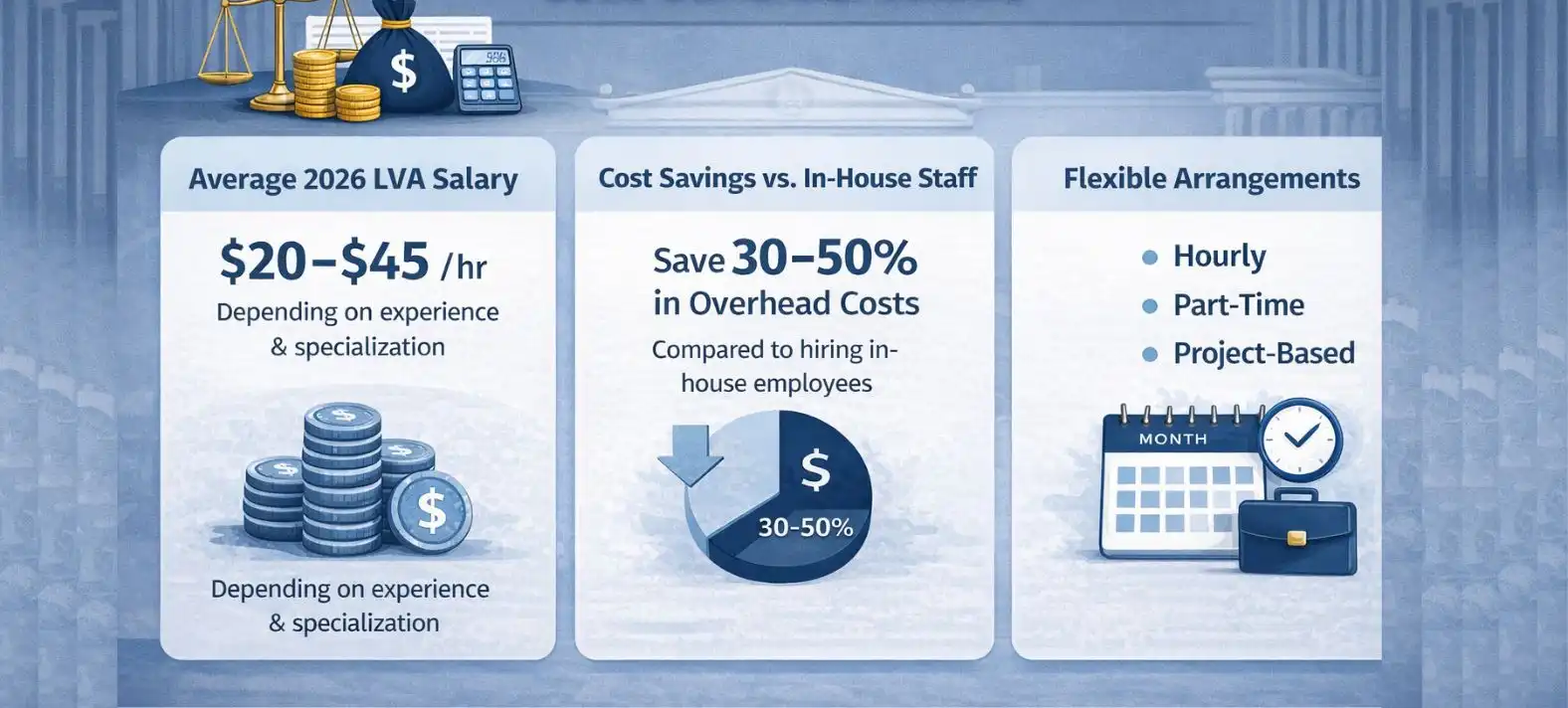
According to Clio, the average hourly rate for a legal virtual assistant ranges from $20 to $45, depending on experience and specialization, while firms can save 30–50% on overhead costs by hiring a virtual assistant rather than a full-time in-house staff member.
Some providers may charge additional setup fees, require a minimum monthly hours commitment, or require a short-term contract commitment. Be sure to clarify these details when evaluating your options, so you understand the full cost structure up front.
FAQs About Hiring A Legal Virtual Assistant
2. How Do I Know What My Virtual Assistant Is Working On?
Transparency is key. LVAs from Wyzer Staffing provide regular updates, detailed progress reports, and timesheets. You can also use project management tools like Clio, Trello, or Asana to track their activities in real-time, giving you a clear overview of current tasks, deadlines, and progress.
3. How Do I Trust Someone I’m Working With Remotely?
Trust is built through clear communication and demonstrated reliability. At Wyzer Staffing, every LVA undergoes rigorous screening and background checks. We also provide ongoing support to address any concerns you may have.
Conclusion
Legal virtual assistants are game-changers for law firms: they save time, increase efficiency, reduce stress, and allow attorneys to focus on improving law firm profitability and strategy.
Challenge yourself and your team: What would reclaiming just 10 extra hours next week mean for your practice? Identify one routine task you could delegate to a legal virtual assistant and measure the impact. Take the first step—see how much more you can accomplish when you let an expert handle the busywork.
By delegating administrative, research, client support, and marketing tasks, you reclaim valuable hours and improve client satisfaction.
Don’t let routine tasks slow your growth. Schedule a consultation to hire a skilled legal virtual assistant today.
Discover more from Wyzer Staffing
Subscribe to get the latest posts sent to your email.